

Week 3 on the road
Trincomalee


After our busy week in Dambulla we submitted ourselves to the rigors of the public bus system again and managed to make our way North East 110km to Trincomalee.
Trincomalee is a large fishing city on the North East coast of Sri Lanka. It has a large port that made it the target of many conquests by the Dutch, Portuguese, English and Japanese (during WWII). It also has the countries biggest mix of Hindu, Muslim, and Buddhist populations. The biggest tourist attractions to Trinco are the white sands of Uppuveli and Nilaveli where the tourist hub is based. From here you can enjoy whale and dolphin watching, diving, snorkeling and chill beach sessions.
Trincomalee was victim to the 2004 Tsunami where the waves reached 2km inland and the tourism industry is only just recovering and starting to thrive again.
The tourist season in Trincomalee is between May and October. Because we visited outside of peak season we were lucky enough to enjoy the beach, ocean and snorkeling without the crowds. However it also meant that a lot of Trincomalee highlights like the ‘beach parties’, yoga classes and water sport activities, were not running yet…
Anantamaa Hotel


We picked our hotel “Anantamaa” out from all the other resort clones in Trincomalee because they had reasonable reviews, a nice looking food menu. Also we booked a room that included free breakfast and dinner buffets every day which we thought would solve a lot of our eating requirements and free up our time.
The hotel is very picturesque. There is a huge swimming pool in the centre surrounded by lots of modern spacious rooms. The hotel even gave us a free upgrade to a larger room when we complained about the loud building work being done next to our original room (too right!).
The ocean was on our doorstep if we felt like a refreshing 30 degree splash, and the swimming pool itself was a luke warm 32 degrees making it the biggest spa pool I have ever been in.
Unfortunately eating gluten free here proved very difficult. Despite having the same chef every night, he still had no idea what gluten was after 6 days! I had to go through the same drill every breakfast and dinner time, requesting that the waiter bring out the chef, ask the chef what I could eat, and then explain to him that butter WAS NOT the same thing as gluten! They did not make me any alternatives so most of the time I was left eating more rice and curry.
The hotel was filled with elderly couples, rich people and a large group of Chinese models doing a week long photo shoot. Although we were very comfortable and enjoyed relaxing by the pool we actually missed the social and personable aspect of smaller places.
Fernandos and 5pm volleyball


Luckily for us, not 200m down the beach was the most popular beachside bar ‘Fernandos’.
As well as serving us lots of food, beers, cocktails and ciders, this also boasted a beach volleyball net. Every night from 5pm until dark, the local volleyball enthusiasts and tourists would play here.
The locals were actually extremely welcoming and would encourage anyone watching to join in. I thought this would be like any social volleyball game, where you are lucky to get a rally with three hits… However I was quickly proven wrong and discovered that several of the locals were actually extremely competent and a couple were even Sri Lankan provincial reps! In any case, it took a while until they actually trusted Sean and I enough to start passing and including us in the play! We played with them every night for 5 days and managed to make ourselves a lot of new friends this way =)
Side Note: Did you know, Volleyball is actually the national sport of Sri Lanka (cricket comes second!)
As well as Fernandos, we made daily visits to our favorite ‘Cafe on the 18th’ which serves the second best coffee I’ve had in Sri Lanka and also does gluten free smoothie bowls and salads.
Fort Frederick; Lovers Leap, Koneswaram Kovil Temple


During our stay in Trincomalee we hired some bicycles for the equivalent of $4 NZD. They were about a hundred years old and more rust than bike but they had a lot of old school charm and it meant a very low risk of theft… We got up at 5.30am one morning and cycled 7km to Fort Frederick to watch the sunrise. This was also our first proper bike ride on the crazy Sri Lankan roads (no bike paths or helmets available obviously) so leaving early meant we had the roads to ourselves and could enjoy the ride.
Fort Frederick is one of the main tourist attractions in Trincomalee. The fort was built by the Portugese in 1623, taken over by the Dutch in 1639 and then the Brittish in 1795. The fort is currently occupied by Sri Lankan military however it is open for locals and tourists to visit. It is also home to lots of wild deer, the colourful Hindu Koneswaram Kovil Temple and “lovers leap” a lookout point at the end of a peninsula.
Side Note:
There are many legends around why Lover’s Leap was given this name, the most well known version of the story revolving around a woman named Francina van Reed. She was engaged to a young Dutch office, who eventually broke the engagement, broke her heart, and left her to go back to his homeland of Holland. Legend has it that she watched the vessel he was on leave the country from this vantage point, and threw herself into the ocean as it sailed past what’s now called Lover’s Leap. There is supposedly a monument dedicated to her somewhere on Swami Rock, which was built in the 1600s by her father, who was a gentleman of rank in the civil service of Holland.
There is another location in Sri Lanka that carries the name “lovers leap”, it is located in Nuwaya Eliya and is in fact a 30m high waterfall but shares a similar backstory
Depressing side note aside, the peninsula is also a good place for spotting blue whales and dolphins and offers amazing views up and down the coastline of Trincomalee
While cycling back from the fort, we stopped in at some other big and colourful temples: Bagavathi Sri Pathrakali Amman Kovil Temple and Villuntri Kandaswamy Temple which were filled inside and out with colourful statues and carvings.
On the way back we also stopped at Dutch Bay, a beach mainly frequented by locals and quite far from the touristy Nilavali and Upeveli. The beach looked very picturesque from afar so we decided to stop and possibly a swim. However when we got onto the beach itself we were confronted with a HUGE amount of rubbish. The beach was literally filled with plastic and I could also see rubbish bobbing on the surface of the ocean. Apparently this is standard at local beaches where there are no tourism operators or hotel staff with incentive to clean the beachfront… Anyway, we opted not to swim with the trash and continued our cycle home.

Trincomalee British War Cemetery


With our bikes, we also stopped off at the Trincomalee British war cemetery. This cemetery is dedicated to soldiers of the British Empire who were killed or died during World War II. We saw Kiwis and Dutch buried side by side and it was eerie to see that their average ages were around 23-24 years old when they died, younger than we are now!
Pidgeon Island


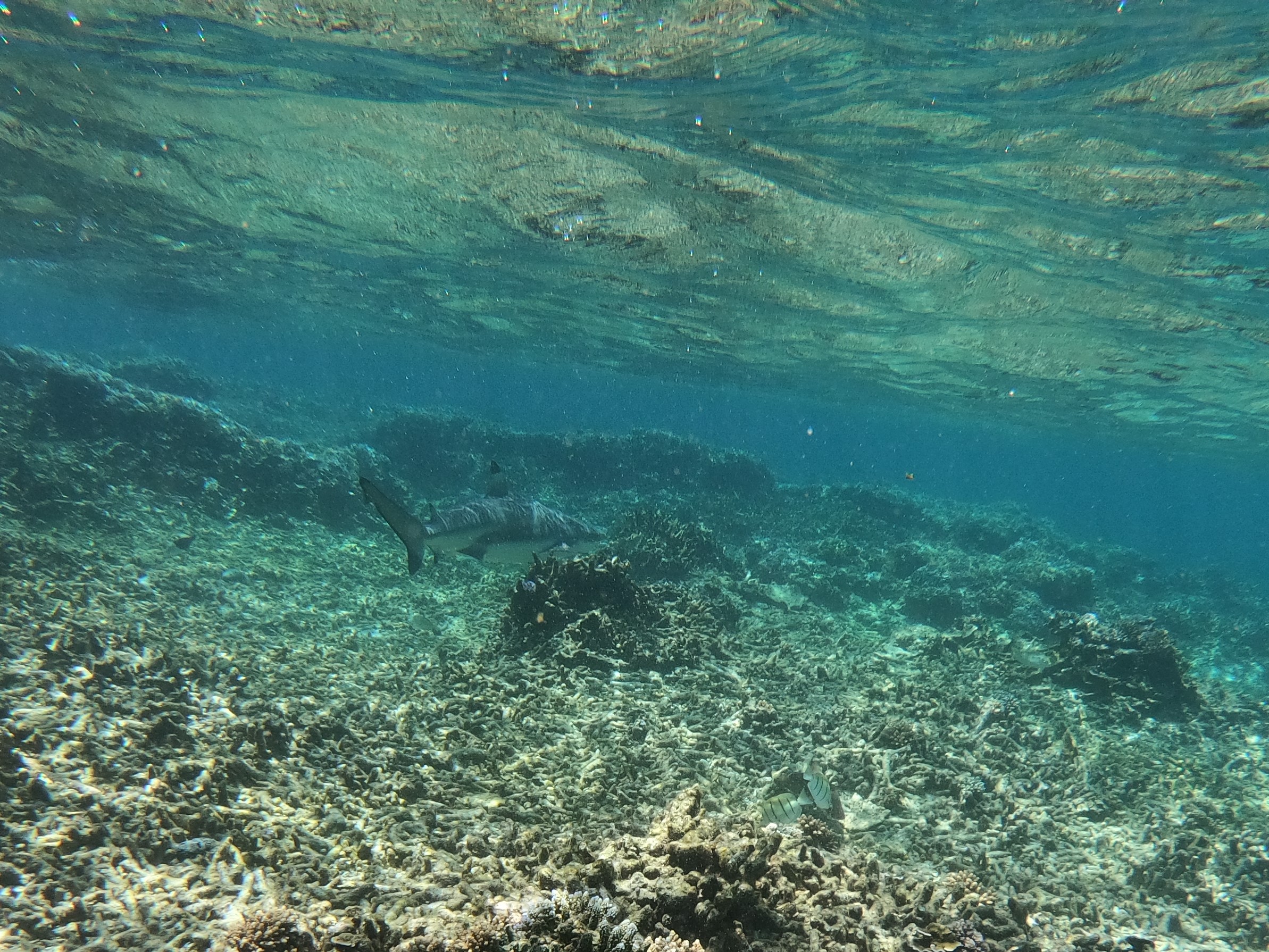
Pidgeon Island is known as the best place to snorkel in Sri Lanka. We read mixed reviews about this place due to the sad state of the coral reef. This decline has resulted from a combination of sun bleaching (thanks to the rising ocean temperatures), the 2004 Tsunami which wiped out a very large portion of the reef, and the huge volume of tourists, many of whom traipse straight over the reef. Several people also complained that they did not see many fish, but they must have been swimming with their heads up their asses because although the reef is in decline there are countless fish and sharks to see.
The island itself has quite a large entry fee (supposedly goes towards conservation however I didn’t see any sign of this ‘conservation work’ on the island). Unfortunately the entry fee does not include the boat trip over (30 minutes from Upaveli beach) or any snorkeling equipment. This left us at the mercy of the local fishing boat cabal who overcharge their transport fee to make a pretty dime of the tourists.
So it took us an afternoon of walking the beachfront and haggling with the plethora of snorkeling tour providers to agree on $4000 rupees for a company to take us both to Pidgeon island the following day.
We were pleasantly surprised with what we saw in this busy underwater world. We swam with two turtles, 10+ sharks (only little reef ones) and what seemed like 40+ varieties of fish. Even in waist deep water I saw countless little colorful fish and a sharks! It was 100x better than Auckland’s Goat Island so definitely worth a visit! Most other visitors seemed to stick to the shallows whereas we swam out past the buoys to deeper water which might be why we were lucky enough to see so much.
Night bus back to Colombo and Galle
After six nights in Trincomalee we boarded a night bus, a fancy one with air conditioning this time. We had booked this a week in advance since it is a 6 hour journey that could have easily taken 10 hours by standard local buses. We left at 11pm and woke up in Colombo at about 4.30am.
Although it was great that the bus completed the trip faster than expected, in this case we would have rather it taken longer as the earliest train to Galle was at 6.30am. So on arrival in Colombo we were faced with the decision of; wait for 2hrs or try to take a bus to Galle. We found an express bus that only took 2hrs along the expressway but it left from a bus station that was 40min across town! Ggarrrrrgh!
Warning: In general you need to be careful of Tuk Tuk drivers in Sri Lanka and make sure they agree to a price before you get in. But at 4.30am be extra careful of Tuk Tuk drivers because it seems only the most desperate are up that early. Sadly we encountered one of these and unknowingly asked him for help getting to the station. He said he could take us to a bus “close by” that would take us to the express station. However this “helpful” ride took us only 200m down the road (walking distance for us), he charged us 150 rupees (if you remember from our previous posts, on average you should be charged 50-60 rupees per kilometer), and then tried to steal an extra 100 rupees when I asked him for change from a 500 note. SNEAKY!!
In the end we made it to the other bus station (by using an UberTuk) and got on the express bus to Galle (at 6.30 so I guess we may as well have waited for the train…) But we made it safely to Galle to start our 2 weeks of house sitting / looking after
Shih Tzu ‘s.
Here’s a peak at some of our Galle pics below =)


 Sean and Marlous travel diaries