

Traffic light cops, Nomades Hostel, Thai food and Salsa in Mexico’s safest city:

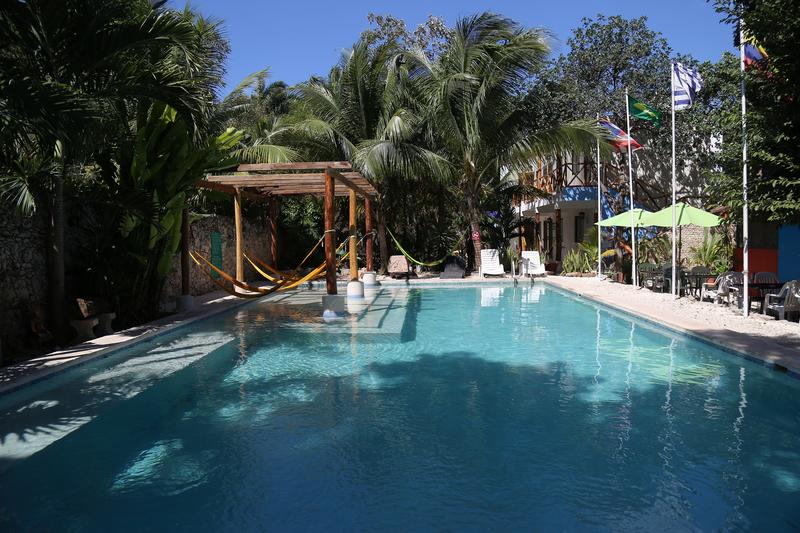


As you know from the previous blog, our stop over in Merida was meant to only be a short 3-day affair before hustling along to Campeche, a beachside town. However, our hostel in Merida, combined with the liveliness of this city, kept us entranced for far longer.
We arrived in Merida by bus from Valladolid in the late afternoon and instead of paying for a taxi, we walked the 3km to our hostel to see a bit of the city on the way. We had booked a fun looking hostel with a pool and hammocks called: Nomadas Eco Hostel. Not only did it look like a nice place in the pictures but it also had group events on every night such as salsa, yoga and cooking classes. An unexpected extra bonus was the presence of a local Thai restaurant that served very nice gluten free Thai food.
Side Note #1: While we were walking through the city center towards our hostel, we noticed that every traffic light also had a traffic cop standing in the middle of the street. We were very confused at this weird use of manpower since the traffic lights were working perfectly fine, so the traffic cop was just directing traffic in the exact same directions as the lights indicated. Later we asked a Mexican friend why the police were directing traffic at all these traffic lights and he was just as confused as us.
Side Note #2: Our Mexican friend also told us a bit of local knowledge about Merida. According to him Merida is known as the safest city in Mexico. Not because the cartels are not present in the area, but actually because all the cartels agreed that Merida would be the ‘Safe Zone” where all their families could live. This is probably one of the only places where, as a solo female, you could feel completely safe walking around the city, alone, at any time of the night.
That night, once we were stuffed full of delicious Thai food, we waddled back to the hostel in time to join the free salsa class that is held every night. Marlous and I got our boogie on and followed the instructors’ lead in the salsa class. The lessons were very basic, but since neither of us had danced salsa since university days we were definitely rusty. Once the group caught on to the basic steps, the instructor taught us some spins and twirls and soon most of us were dancing through the hostel.
After about 90 minutes the instructor informed us that there was a live salsa band playing nearby and a group of us wandered over to have a look. It was in a large internal courtyard which was surrounded by food truck style fast food restaurants (all Mexican food). In the middle of the courtyard there was a live band playing salsa music and a huge crowd already dancing. This was a really cool setup because you could sit around at the food trucks and have a drink and nibble while watching all the incredible dancers whirling through their fancy moves in the centre. In proper Mexican style, all the tables soon got pushed aside and everyone was dancing from young to old, and from complete beginners like us to seasoned salsa pro’s. It was pretty much all local people eating and dancing here and the vibe was super open and welcoming allowing everyone to join in and have a go without fear of being judged. A cool trend that we noticed here and throughout our time in Mexico is that everyone dances with everyone. If a local comes up and asks you to dance he/she is not hitting on you, but simply trying to involve you and have some fun.
Izamal – The Yellow City


The next morning we walked down to the collectivo zone of central Merida and jumped into a minivan with a bunch of locals for a cheap $2 trip to Izamal. Izamal is a small town about an hour ride by collectivo from the centre of Merida. The easiest way to see the city is through a group tour but as we have learnt from the many countries we have visited; there is always a far cheaper and better way to see places like this.
The town of Izamal is a cute collection of cobblestone streets and bright yellow painted walls that are edged in white. In 1993 Pope Frances visited the town to deliver an important speech, prompting the locals to paint the buildings a striking yellow in honour of “Kinich Kak Moo”, a representation of the Maya sun god. Since then, this paint job has stuck and the whole town continues to maintain a yellow façade. Aside from the picturesque yellow walls, the town hosts a large Catholic monastery with the second largest outdoor atrium after the Vatican. Also within the town are the ruins of two Mayan pyramids.
Our hour long collectivo trip was rather uneventful (without the Georgian style of overloading passengers or random breakdowns) and we were soon dropped in the centre of town. We spent the first hour wandering around the Catholic monastery, then walked up the nearby Mayan pyramid just out of the centre of town. By this time, it was past lunch and we had worked up quite an appetite. So it turns out that the downside of being in a small town is the lack of restaurants that understood “Gluten Free”. So instead of risking a sore stomach, we brought our staple Mexican lunch from a corner store; nacho chips, salsa and avocado. We ate our food on top of some more Mayan ruins, looked through the local museum of art and wandered through a small local craft market in the central square where Marlous found some nice earrings made from polished cactus spines, before jumping back on the collectivo to Merida.
La Noche Blanca:


Back in Merida we talked to some friends who told us about a city-wide event on that night. We were told “La Noche Blanca” offered more than 115 shows with more than 220 artists, in approximately 100 different pop up venues across the city. This sounded amazing so we agreed to meet up with a friend from salsa dancing (actually a local from Mexico City) and explore the city with him later that night, after eating some more Thai for dinner obviously.
That evening we wandered around town with Juan, looking for the music shows promised by the event. However it seemed that the whole city ran on island time. In some places we arrived at the scheduled time for a performance to find it halfway through and reaching its end. Other times we arrived and they band was still setting up, far behind their schedule. So jumping from location to location, we chased the music shows and mostly failed at seeing anything. This was more funny than disappointing, the city was still awash with thousands of locals and buskers, so we got to see and hear plenty of the traditional music and dances. It ended up being a great night and we managed to catch one of the final performances of the night “Mestizo”: a Spanish re-enactment of the conquistador’s invasion of Yucatan region. We didn’t understand most of the show since it was in rapid fire Spanish, but with plenty of vibrant costumes and theatrical renditions of the key events of the conquistadors vs. the Mayans, even a tourist like me could understand the underlying story.
We got back to the hostel well after midnight and extended our booking for another 2 nights so we could continue to enjoy the city and surrounding sites.
The City of Merida – Free Walking Tour:


The next morning we rounded up a few people from the hostel, including some people from the salsa night (Juan, Max, Alix, Clara, Marlous and I) and joined a free walking tour of Merida’s town centre.
The city of Merida is the capital of Yucatan, one of three states in the Yucatan Peninsula in Mexico (the other two being Quintana Roo and Campeche). Merida was once called by the Mayan name of “T’ho” before it was conquered by the Spanish in the 1540’s. The Spanish named this small Mayan settlement Merida because the mortared stone buildings reminded them of the roman style buildings in the city of Merida, Spain. Like most conquered Mayan villages, the locals had their stone pyramids and buildings deconstructed by the Spanish and the materials were used to build the city chapel and other government buildings.
These days Merida is the largest city in the entire Yucatan peninsula with a population of approximately 750,000 people. Merida is reasonably close to tourist destinations like Chichen Itza (Mayan Ruins, now a world wonder), Uxmal Ruins, Izamal (the yellow city) and countless cenotes, however it remains blissfully free of mass tourism. Wandering around the city during the tour allowed us to see a truly Mexican city filled with people going about their day-to-day lives. Every night of the week, there is a different public event happening in the city which draws thousands of locals and any tourists who happen to be in town. Events include video mapping of Merida’s history on the chapel walls, singing performances and weekly Friday night Pok-Ta-Pok games (an ancient Mayan ball sport).
The tour finished just after midday and we were all hot and in need of some refreshment. So we decided to make the most of the afternoon by visiting some cenotes close to Merida. The six of us raced back to the hostel, grabbed our togs and rushed off to catch a collectivo to the dusty village of Homún. The hostel staff recommended a cenote there called Santa Rosa. This is only a 45min ride away which would give us plenty of time to arrive, relax in the cenote, and get home before the last returning collectivo at 7pm.
Cenotes of Homun
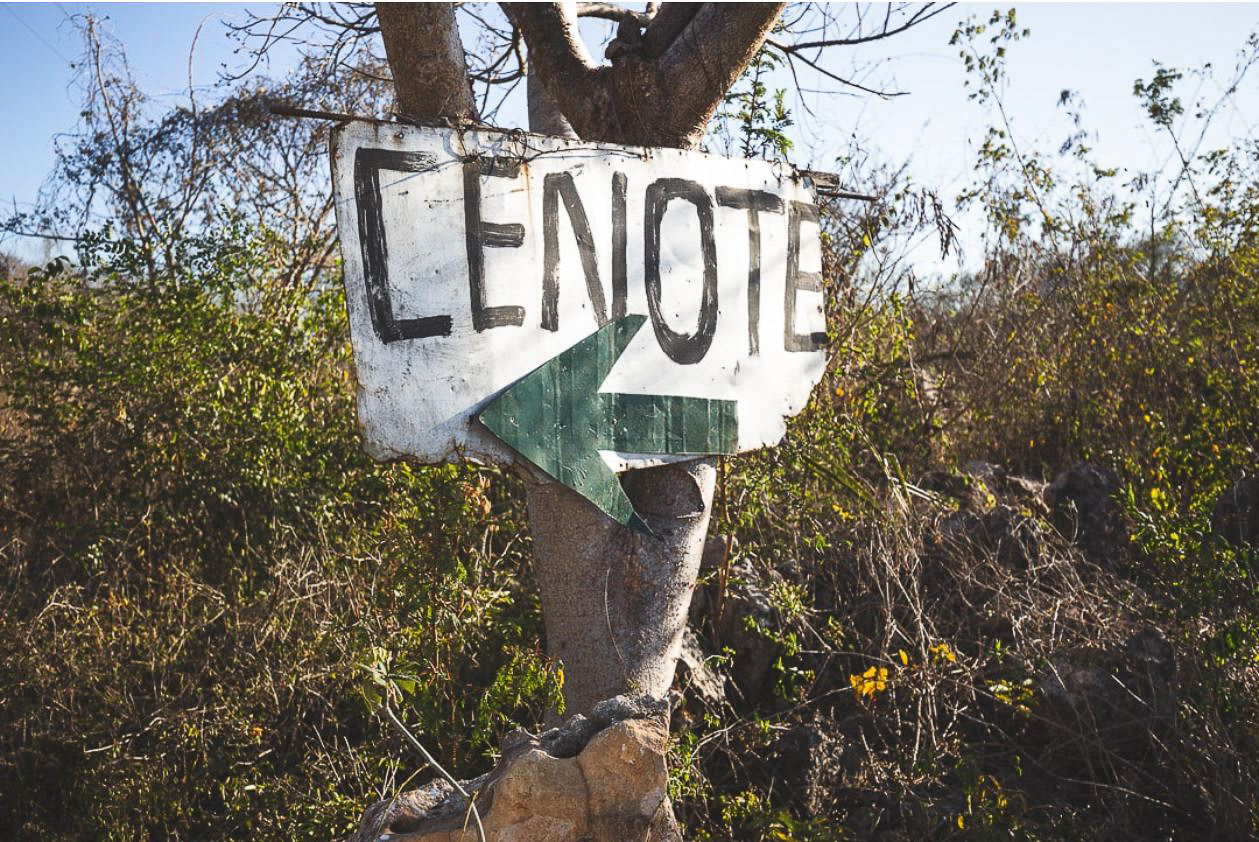
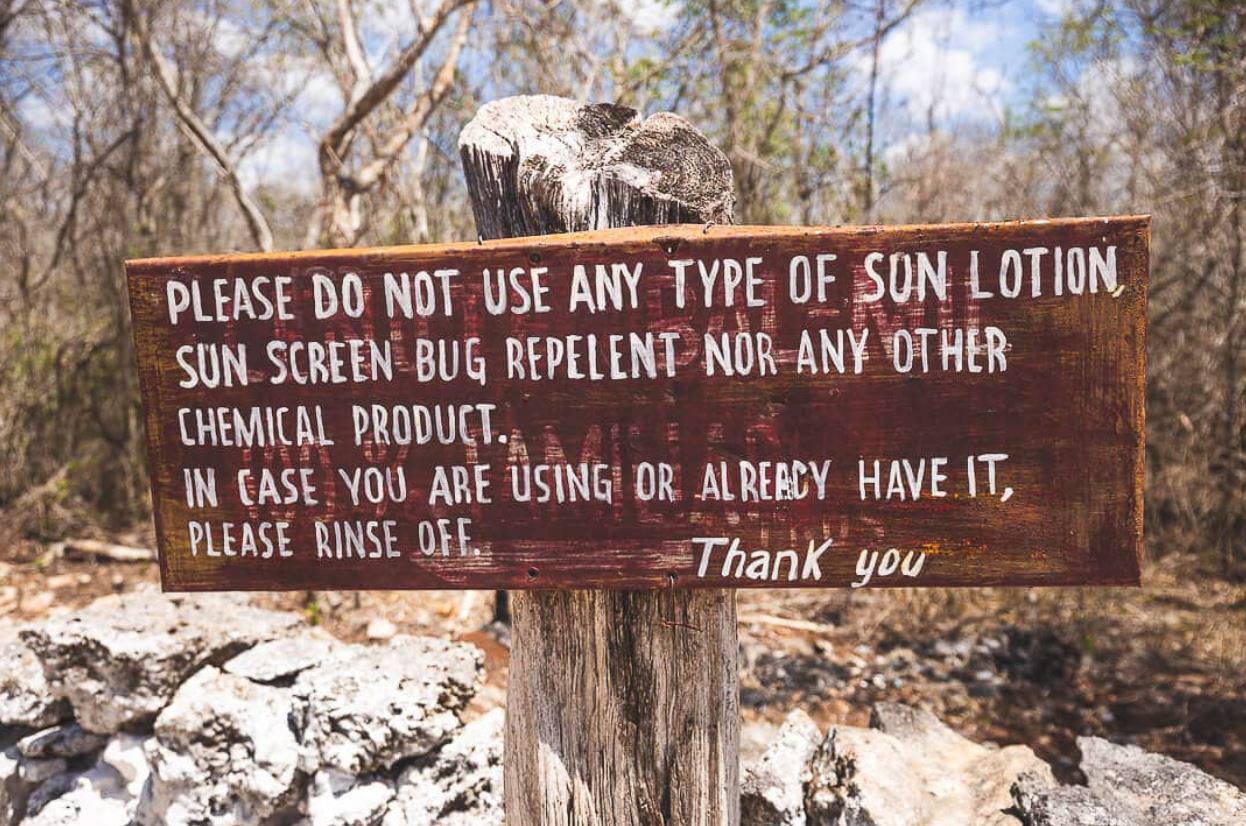
Scattered around Homún are hundreds of sink holes in what has come to be known as the ring of cenotes. Because it is so far from the tourist centres of Cancun and Tulum the cenotes of Homún feel more rustic and maintain more of their natural appearance. Out of the many cenotes in the vicinity, only 15-20 of them are open to the public. Some are owned by local farmers, while others are more commercialized and set up to attract tour groups.
Santa Rosa cenote is located close to the centre of Homún and is less popular than the nearby Santa Barbara cenote. I think collectivo drivers must get paid a tip to bring the tourists to the very touristy Santa Barbara because our driver literally detoured to take us to the doors of this cenote despite there being other local passengers in the bus. He insisted that we get out claiming that this was the only cenote and that he couldn’t take us anywhere else. There were crowds of tourists and tour buses around and even a concierge like man to greet the collectivo. Luckily with google maps in our pockets and a fluent Mexican in our group, we knew he was lying. We jumped back in the van and wouldn’t pay or leave until he took us to the edge of the Homún centre (literally along the bus route) from where it was only a few hundred metres walk to the cenote we actually wanted.
Feeling accomplished after beating the collectivo driver at his tricks, we arrived at Santa Rosa cenote and changed into our togs. This cenote had a small hacienda around it and the option of eating at a simple restaurant before or after your swim. We opted for the ‘after’ and raced towards the cold underground water. Before we could jump in we were yelled at by a small boy (who turned out to be a “lifeguard”) and told to put on life jackets. I guess this is a sensible request if people can’t swim and the water is deep, but we were all confident swimmers and ironically the water was barely past our chin in the deepest places. After explaining this to the child and losing our argument, we jumped in with our pink life vests on and finally got to cool off swimming amongst the purple fluorescent lights.
Caving in someones backyard:


Once we cooled off and our appetites were sated we wandered slowly towards the town centre to take our collectivo back to Merida. It was already late afternoon and we only had about 80 minutes of light left but when we came across a hand painted sign advertising a cenote in someone’s backyard we decided to have a quick look. The entrance to the cenote was behind a family’s house under their massive Lebbeck tree. The family owned the land and thus the cenote and we were warmly greeted by the elderly Mexican couple that lived here. Surprisingly despite the impending nightfall, we were still allowed to enter the cenote, and they charged only 30 pesos per person compared to the 200+ pesos that most commercial cenotes ask! The Spanish only speaking husband then acted as our guide and led us under the Lebbeck tree and through the rabbit hole into the subterranean Alice in Wonderland world.
It turns out this cenote also had an extensive cave network, so when we got to the main cave chamber the guide asked if we wanted to just visit the cenote or take the ‘adventure tour’. Our expectation for the adrenalin level of this adventure was relatively low after being forced to wear lifejackets in the previous ‘dangerous’ cenote. So we figured we could quickly knock out the adventure route, jump in the cenote, and still make it back in time for the last bus. The guide looked doubtful, but we assured him we would be fine and off we went.
After just a few minutes the guide stopped and recommended we strip down to our togs. We were suspicious about whether this was necessary but sure enough just meters away in the darkness was a narrow fissure to the deeper cave system covered in chest deep water. With all of us completely unprepared to do any caving we had to borrow one of his headlights and use cellphone for extra lighting. The next hour saw us crawling, swimming, wading and sliding through a cave system that had probably seen no more than a few dozen humans. There were bats everywhere which were cool to see up close, until they started dive bombing towards us… But the guide assured that their echolocation would prevent them from actually colliding with me.
The guide explained that this cave was used by his Mayan ancestors and that a few people each year still follow the path we had taken towards the entrance of the underground water system. Tradition then dictated they switch off all lights for 5 minutes and submerge below the holy water that marks the entrance to the ‘underworld’ in order to pay their respects to the dead. He asked if we would like to visit this holy place and explained that we would have to commando crawl 30m through a low tunnel. We all said yes and with a lot of grunting and squeezing we finally arrived at the dead end. This was a small pool 5m by 1m without a bottom. We were told that if you swim down 3-4m into the watery depths it opens up into an underground river system which connects with other cenotes, the closest being at the village church. He warned that there can be underwater currents from this river system that could suck you into the tunnels. I’m not sure if that was a myth or not but it sure freaked us all out!
After crawling and wading back the way we had come, we returned to the main cavern and had just enough time left to swim in the two fully enclosed cave cenotes. Both turned out to be amazingly beautiful with crystal clear waters inside a relatively untouched system with stalactites and stalagmites everywhere. In New Zealand caves like this would be protected with all sorts of warnings not to touch the stalactites (disrupts their growth) however the guide proceeded to demonstrate how to play drum solos on the various sized stalactites and insisted we all have a go.
We emerged from the cave to find it was pitch black outside and were surprised to discover we had spent over 3 hours underground! It was incredible how little we had to pay for this amazing experience, and we tipped our guide generously. We then raced to the centre of the village and thankfully made it there just in time to catch the very last collectivo back to Merida, otherwise it would have been a very expensive taxi ride back.
Side note: We are keen to help keep this place slightly on the down low so sit doesn’t get destroyed by tourism (assuming anyone actually reads this blog?!) But if you are dying to know where this place is, hit me up and I might let you know….
La Mezcaleria Bar


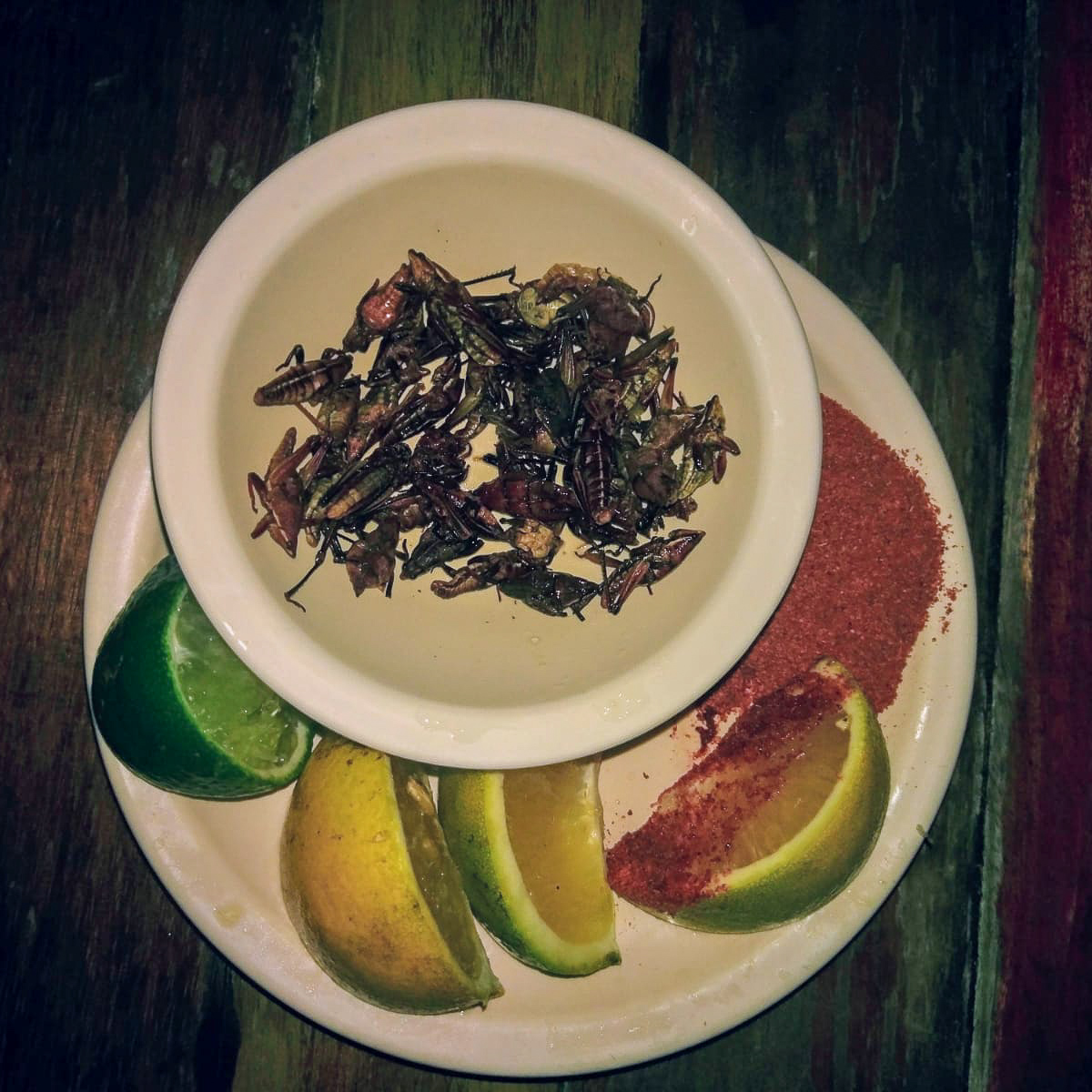
With everyone hungry and thirsty after the exploration we decided to head out to a bar for dinner, drinks and maybe a dance. La Mezcaleria was a bar only a few blocks from the hostel and it had a live salsa band starting at 10pm. We went to the bar with our caving group and ordered ourselves a table full of nachos, beers, GnT’s and even a bowl of fried crickets! Juan insisted that we try these crickets with dipping sauce, so we each downed one and surprisingly they weren’t too bad. Not good enough that I would order some over a plate of fries in a bar, but not a bad kind of meaty/crunchy/salty snack.
Once the crickets settled in our stomachs we got back on our feet and salsa’d around the dance floor. It was a cool vibe in the bar and despite being some of the only tourists, we were made to feel welcome by all the locals. Our German friend didn’t even make it back to his bed after a dashing Argentinian woman kidnapped him for the night (even though Marlous did a terrible job as a wing-woman).
La Chaya Maya:

During our previous walking tour, the guide had mentioned a Mexican dish called “Sopa de Lima” and recommended we try it at the local restaurant “La Chaya Maya”. Sopa de Lima is a traditional dish from Mexico’s Yucatan Peninsula, it is a spicy, flavourful chicken and tomato soup. The soup is flavoured with unique, bittersweet Yucatan limes and spicy habanero peppers. So our group got together one last time for lunch the following day to try this meal. With Christmas fast approaching and lots of festive decorations there was a great ambience and it was sad to say farewell to a few of our newfound travel buddies.
I decide to try something different on the menu and share Marlous’s “Sopa de Lima”. This turned out to be a good choice because although the soup was delicious it was not very filling (I was slightly hungover and had skipped breakfast). Instead I ate some delicious pulled pork tacos and a plate of tortilla chips with guacamole and salsa. Mmm.
Cooking Class – Homemade Tortillas and Chicken Fajitas:
As we mentioned earlier, our hostel offered free cooking classes in the evenings. This evening we did our first cooking class and were taught how to make fajitas. We were shown how to make the tortilla dough, then used a tortilla press (a metal device that flattened small balls of dough to make the round thin tortillas) to squash them flat before toasting them in a pan to make the cooked “soft” wraps. The chef then explained that fajita vegetables and meat must be cut in long thin strips in order to qualify as a “fajita” meal. So we cut up and marinated the chicken and vegetables in a sour orange sauce before cooking it and putting the meal together. For a small price, we got to eat our homemade product (joining in the class is free, you only pay to eat at the end).
Side note: most Mexican tortillas are naturally gluten free since they are made of 100% maize flour (not to be confused with western cornflour)
Fun Fact: “The term “fajita” literally means “little sash,” the diminutive of the Spanish word faja, meaning “belt, strip, or band.”. Thus the ingredients have to be cut long and thin like little belts or bands, whereas tacos are often cubed meat and ingredients with different spices in the same soft tortilla wrap.
La Mezcaleria – Round 2
After the delicious cooking class we joined yet another free salsa class, learnt a few new dance moves for our repertoire, and met more friendly, fun people (including Lester from Holland, Katie from England and Anna from Ireland). Along with Alix and Juan (the last remaining members of our caving group) we headed back to La Mezcaleria to show off our new salsa moves. Alix and Lester were both amazing Salsa dancers and put our skills to shame, but the environment at all the bars we visited in Mexico was so welcoming that we never felt embarrassed or shy and no matter how good or bad, everyone was welcome on the dance floor!
The bar had a live band playing every night from 10pm until midnight which seems to keep the bar packed and lively every night of the week. We went on a Sunday and Monday night (with low hopes assuming it would be empty) and it was still packed so full of people we could barely move!
Side note: Another cool thing we observed at these bars was that most locals weren’t even drunk. Quite a difference to us westerners who usually need 5+ beers before we even consider dancing! I was very happy to join in the local custom of dancing sober because it meant we could have a great night but still wake up the next day with enough energy to make the most of our time. Why can’t we adapt this custom in NZ??
Uxmal Ruins


We met a Dutch couple who decided to hire a car and invited us to join them to visit the Uxmal ruins. So the following day we extended our hostel booking yet again, and joined them for the ride.
After Chichen Itza, Uxmal is second most visited archaeological site in the Yucatan Peninsula. Before being abandoned around the time of the Spanish invasion, Uxmal was home to 20,000-25,000 Mayan inhabitants. Because Uxmal is one of the few Mayan cities not built near fresh water cenotes, there are a large amount of carvings and worship sites dedicated to the Mayan god of rainfall; Chac. To provide water for all its inhabitants the architects of this city built many cisterns to store the rainwater.
Here are some of the main attractions at the site:
- The Pyramid of the Magician: “Its name comes from a Maya tale of the 19th century, titled the Leyenda del Enano de Uxmal (The Legend of the Uxmal’s Dwarf). According to this legend, a dwarf constructed the pyramid in one night, helped by his mother, a witch.” It was a cool structure to see, the biggest pyramid by far that we had seen in South America.
- The Nunnery Quadrangle: this name originates with the Spanish conquistadors who, when seeing the structure for the first time, were reminded of a Spanish nunnery, however it was actually a 74 room governmental palace. We walked through the rooms of this palace and discovered dozens of creepy bats nesting in the roof and walls.
- t using a small rubber ball about the size of a small beach ball. The aim of the game was not to let the ball touch the ground and try to score a goal using only your hips, knees and elbows to touch the ball. The court was often a large stone courtyard with sloped walls and two stone rings (goals). The court at Uxmal was in reasonable condition and it was easy to visualise the ancient game being played in the city.
- The Great Pyramid: This was another large pyramid in the Uxmal site abut one that you are allowed to climb. This meant you could go all the way to the top and get a great view of the ancient city surrounded by jungle. At 40m this pyramid is higher than Chichen Itza (and you are not even allowed to climb Chichen Itza).
- The Palace of the Governor: This is a large, long, rectangular building with many carved surfaces and statues set into the walls. It was built on a large elevated stone platform with a view over the city.


Before leaving Uxmal we were told about a nice hand craft market on the way back to Merida which we decided to visit. It was a small house with a shack next door where you could see people making the souvenirs. After drooling over all the awesome handmade crafts that we wanted to buy (but couldn’t fit in our bag) we settled on a small hand carved coconut shell depicting the Mayan god; Kukulkan, a feathered serpent that is the Mayan god of the wind, sky and sun.
Lastly we stopped at a beautiful old Hacienda for an elaborate lunch before arriving back at our hostel for the nightly salsa lessons which we were still making the most of!
Progresso Beach:


Following her Kitesurfing lessons in Cancun, Marlous wanted to keep learning and progressing. She found a local guy who taught lessons at Progresso, a beach 30 minutes outside of Merida. Having explored most of Merida and the surrounding tourist attractions, we decided a day at the beach would be quite nice. Our adopted French friend Alix decided to join us and on the way to the Progresso bus stop we quickly popped into the local market and bought ourselves a tortilla press (we were inspired to make homemade tortillas back in NZ).
We arrived at Progresso after a short bus trip to be greeted by a town under construction. We don’t know if there was a flood or a weird disaster in the town, but it seemed like every street and side walk was under construction or renovation. Maybe they were giving the town a makeover to create more of a tourist friendly vibe but I was not a nice place to be in the meantime. So we high tailed it to the beach and set up our towels for some relaxing and sun bathing. The locals had a different idea though, because every 2 minutes a different hustler would interrupt our soirée to try sell us trinkets and souvenirs! After 20 minutes of failing to fend them off, we collected our stuff and walked 3km down the beach to where Marlous was meeting her Kitesurfing instructor. Thankfully the beach here was empty and Alix and I could relax while Marlous started her lesson.
Marlous’s lesson turned out to be a bit of a disaster and she called it quits in less than an hour, she still has scars on the back of her legs to prove it. We wont go into details here but suffice to say the guy didn’t speak great English and forgot to bring an board (as he thought she was a beginner and would be doing only land training).
Before heading back to Merida we played some coconut catch, a new game we invented after Alix fished my empty coconut out the trash can, then detoured into town to grab a snack. We ordered some beers and a plate of fries, yet somehow we ended up inundated with food. It is common in Mexico to be served tortilla chips and guacamole for FREE when ordering drinks. However this place took it to a whole new level because we were served tortilla chips, guacamole, shrimp snacks, bread and dip, spicy bean mix and then our french fries (which we ordered) all for free. Turns out we could have just asked for a few beers and got an entire free meal, it was great!
Adios Merida:


The next morning we had breakfast and said farewell to our buddies before packing up and heading to the bus for our trip to Cozumel. Merida was by far our favourite place in Mexico and we highly recommend visiting (and staying at Nomades hostel).
Disclaimer: as you might know, my Iphone was stolen the following week and therefore I lost many of my photos. I still wanted to give you an image of what Merida was like so there are 10 stock images of the city scattered through this post (not taken by me) see if you can spot which ones they are!
 Sean and Marlous travel diaries